Set rings
On a milling spindle, millimetres matter: the height at which a cutter block rotates directly determines where the profile ends up in the workpiece. Set rings for cutter heads are the simplest and most reliable way to fix this position exactly. This range includes more than one hundred versions: individual set rings in various sizes, such as 70 × 50 × 3 and 50 × 30 × 8 mm, shims, set rings for cutter heads and complete sets.
If you regularly change setups, it is best to choose a set with different thicknesses. By combining thin and thick set rings, you can adjust any desired height precisely without using improvised spacers. Always keep the rings clean and undamaged: one burr between two rings can tilt the entire cutter head on the spindle.
Filters
Availability
B (bore) in mm
D (diameter) in mm
Brand

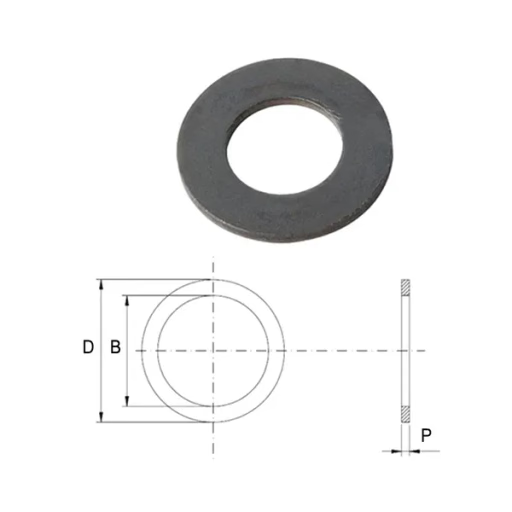

Adjusting rings D=50mm B=30mm
- D=50 x 30 (3x3mm 4x1mm 4x0.5mm 4x0.3mm 4x0.1mm total 19 pieces)

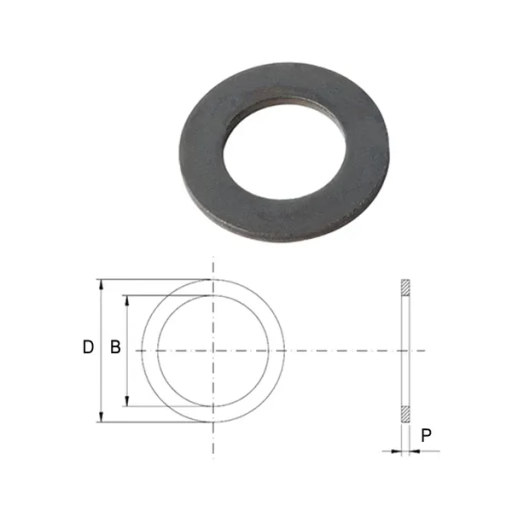
24 of 108 products shown
Spacer rings for router and saw arbors
Spacer rings are precision rings that you slide onto a router or saw arbor to determine the tool height. They fill the space between the arbor shoulder and the tool and, in stacked cutter heads, keep the spacing exact. You will find spacer rings and shim rings from CMT and GRN Tools with a bore of 30, 35, 40, 50 or 60 mm and 31,75 mm (1 1/4 inch), smaller rings for glue-line trim routers and scoring saw blades, and thicknesses from 0,1 to 33 mm, individually or in sets.
Setting the height with a set of rings
With a set of rings in different thicknesses, you can set almost any height. Work like with a coin set: combine thicknesses to the desired size and note which combination you used, so you can later reset the same setting exactly. On stacked cutter heads, the rings between two discs determine the groove width or the distance between two profiles.
Flat, clean and fully on thread
A spacer ring must be perfectly flat and clean: one chip or a slight dent tilts the tool, and you will see that immediately as vibration marks in the workpiece. Check the rings for burrs and replace damaged ones. Also make sure that after stacking, the clamping nut still engages fully on the thread — a nut that only grips halfway is a real danger at high speeds.
What exactly are spacer rings used for?
How many rings may I stack?
Why does my tool vibrate after adjustment?
Which thicknesses do I need?
What bore should my spacer ring have?
Related categories
- Cutters
- Locking ring
- Ball bearings
- Saws
- Bushing enlargers
- Drills
- Reducer rings
- Knives
- CNC accessories
- Pressure pads
- Machines & accessories
- Adapters
- Fan Items
- Drill holders for dowel drills
- Collet Chucks
- Sharpening and Adjustment Service
- Bolts
- Nuts
- Keys
- Dovetail joint parts
- Parts for mortising machines
- Machine parts
- Other parts